
Business Phone Systems in Melbourne: Cloud vs On-Premise — Which Is Right for Your Business?
An honest comparison from Action-Priority — Avaya, RingCentral, and Alcatel-Lucent specialists
If your business is still running an ageing on-premise phone system, you're not alone — thousands of Melbourne businesses are still paying for maintenance on PBX hardware that's years past its best. But the decision to move to a cloud phone system isn't always straightforward. This guide breaks down the real differences so you can make the right call for your business.
What is a cloud phone system?
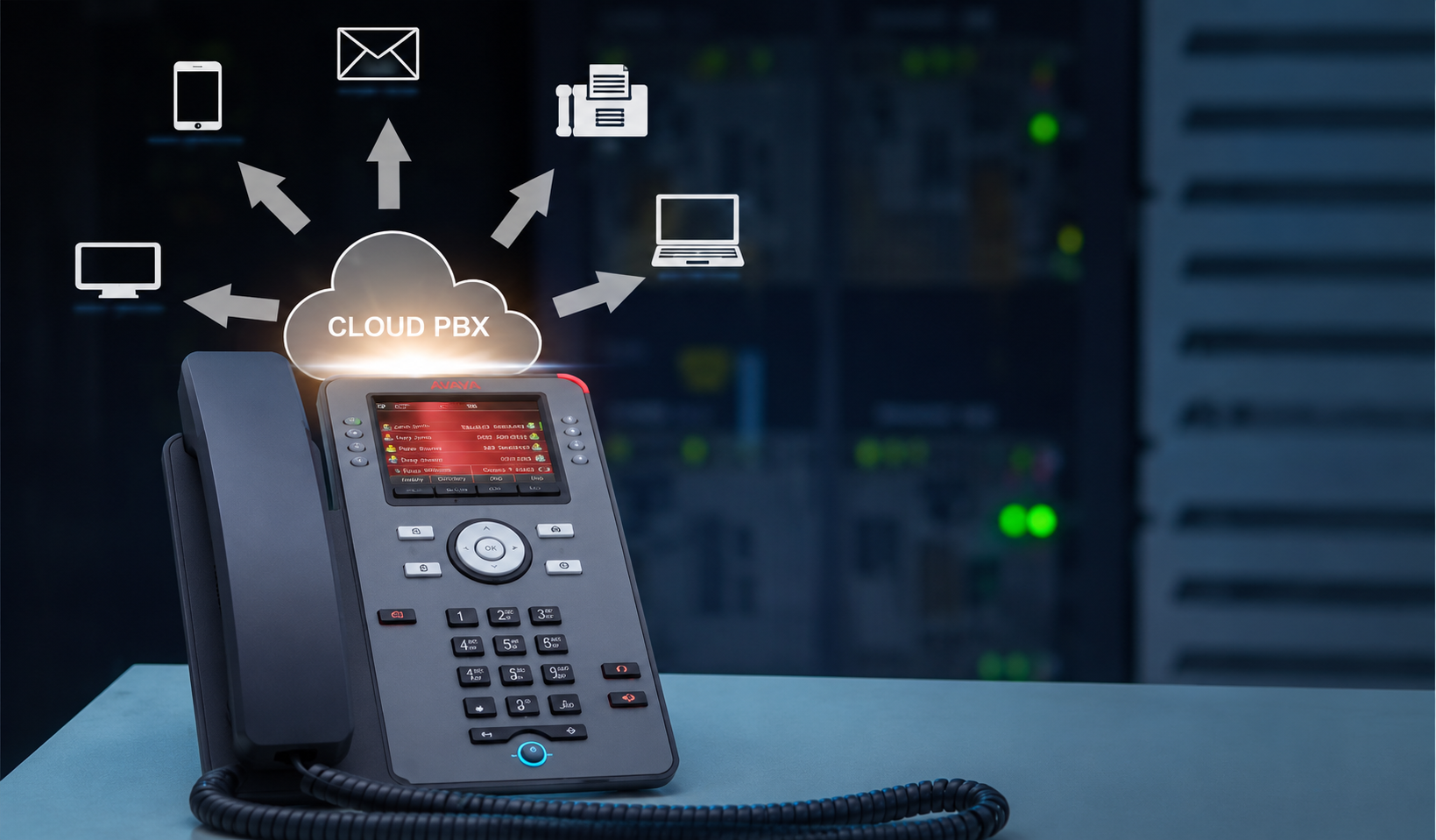
A cloud phone system (also called a hosted PBX or UCaaS platform) runs entirely over your internet connection. Instead of a physical box on the wall, your calls are handled by servers managed by the provider. Avaya Cloud Office, RingCentral, and Alcatel-Lucent OXO Connect are the platforms Action-Priority installs and supports. Each has its own strengths, but all offer the core benefits of cloud telephony: no hardware to maintain, easy scalability, and features that were once reserved for enterprise businesses — auto-attendants, call queues, voicemail-to-email, and integration with platforms like Microsoft Teams.
What is an on-premise system?
An on-premise system like Avaya IP Office installs a physical PBX server at your business premises. Calls route through that hardware, and your phones connect to it directly. The advantages are reliability (no dependency on internet quality for internal calls), deep customisation, and often a lower total cost of ownership over 5–10 years for larger sites. The disadvantages are upfront hardware cost, the need for on-site maintenance, and the fact that remote workers need more complex configuration to access the system.
Key questions to help you decide
Do you have remote or mobile workers? Cloud wins — they can use the app from anywhere. Do you have more than 20 staff at a single site? On-premise or hybrid may be more cost-effective. Is your internet connection reliable? Cloud requires a stable NBN or fibre connection. Do you want to avoid capital expenditure? Cloud is subscription-based — no big upfront cost. Do you need deep integration with your CRM or other software? Most cloud platforms have robust API and integration options.
What does a business phone system cost in Melbourne?
Cloud systems typically cost $25–$65 per user per month depending on the platform and feature set. On-premise systems involve an upfront hardware cost (often $3,000–$15,000+ depending on size) plus annual maintenance. Action-Priority will model both options for your specific headcount and usage so you can make an informed comparison.
Getting the right advice
Action-Priority is not tied to any single vendor. We're authorised partners for Avaya, RingCentral, and Alcatel-Lucent, which means we recommend what genuinely suits your business — not what earns the highest margin. Our team has been designing and installing business phone systems since 1988, and we provide full installation, number porting, and ongoing support.
📞 Get in Touch | Thinking about upgrading your Melbourne business phone system? Call Action-Priority on 1300 642 052 for an honest, obligation-free consultation.
Recent Posts